Drip lines, explained
How we size an irrigation system, where the water goes, and the controller settings for each season.
- Written by
- Matteo Bassi
- Topic
- Water
- Reading
- 1 min
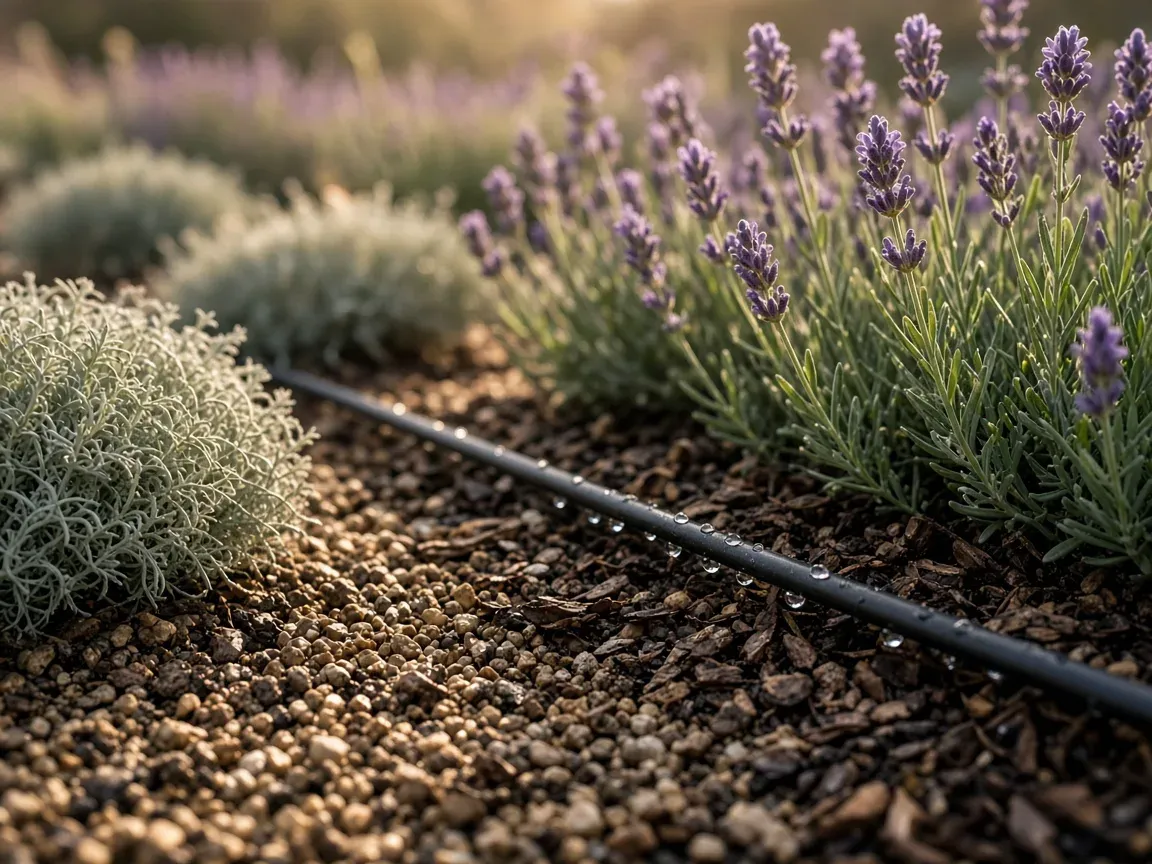
Sprinklers throw water into the air, onto paths and walls, and lose a third of it to the wind before it reaches a root. A drip line puts it on the soil, slowly, where the roots are. In a Mediterranean garden that is the difference between a bill and a much smaller bill.
How a system is laid out
We split every garden into zones by what the plants need. Lawns, new planting, established shrubs and trees each get their own valve, because a ten year old olive and a bed planted last week should never share a schedule.
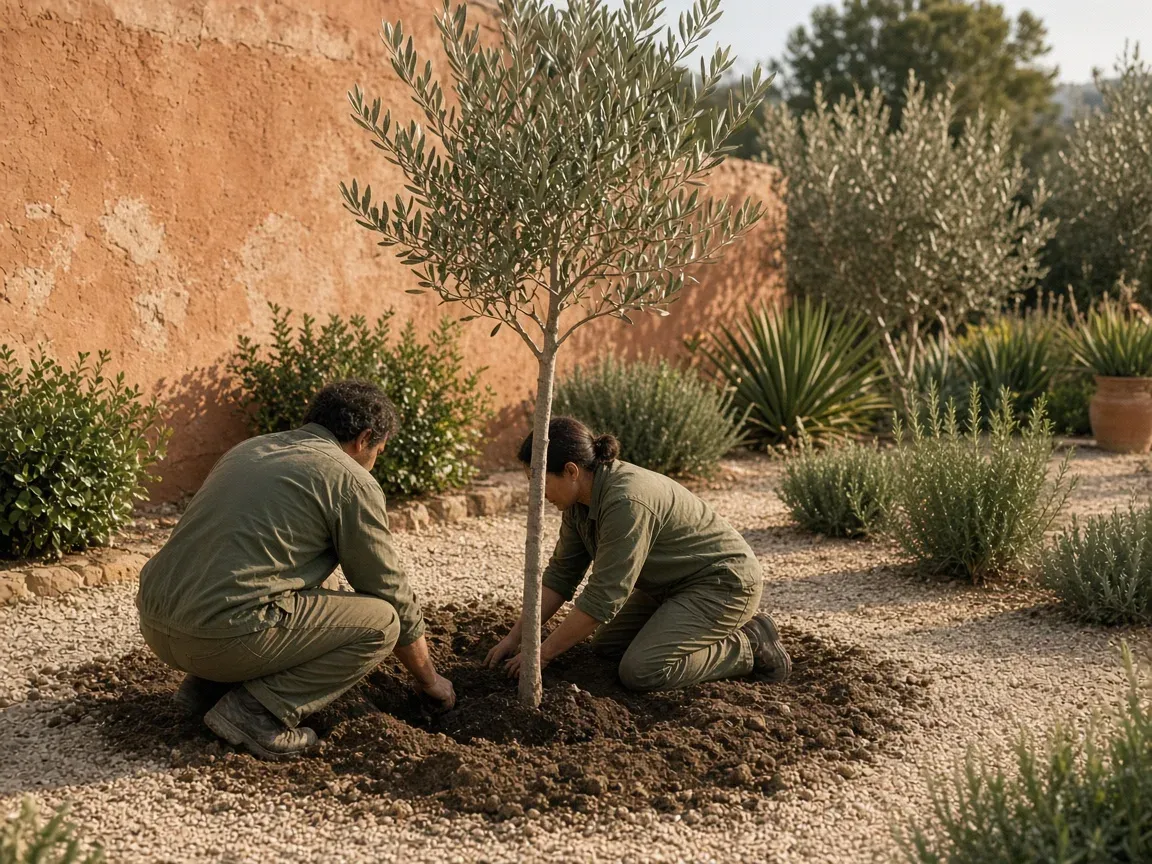
Each zone gets a line with emitters every 30 cm, pressure compensated so the last plant gets as much as the first. Trees get a ring of line around the drip edge of the canopy, not against the trunk.
How much water
For new planting, little and often until the roots are established: twenty minutes every other day in summer. After the first year, less often and longer, so the roots go down after the water. An established dry garden may need forty minutes once a week in July and nothing from October to May.
The controller
Ours are set by season, not by month, and every system has a rain sensor. A useful starting point for the coast:
- Winter: off, unless January is dry
- Spring: once a week
- Summer: two or three times a week, before sunrise
- Autumn: once a week until the rain comes
Checking it
Twice a year we run each zone and walk the garden, looking for dry patches, puddles and emitters blocked with lime, and every spring we flush the lines at the end of each pipe. Ten minutes of checking saves a lot of plants.